
1. Introduction: Embracing Diversity as a Societal Strength
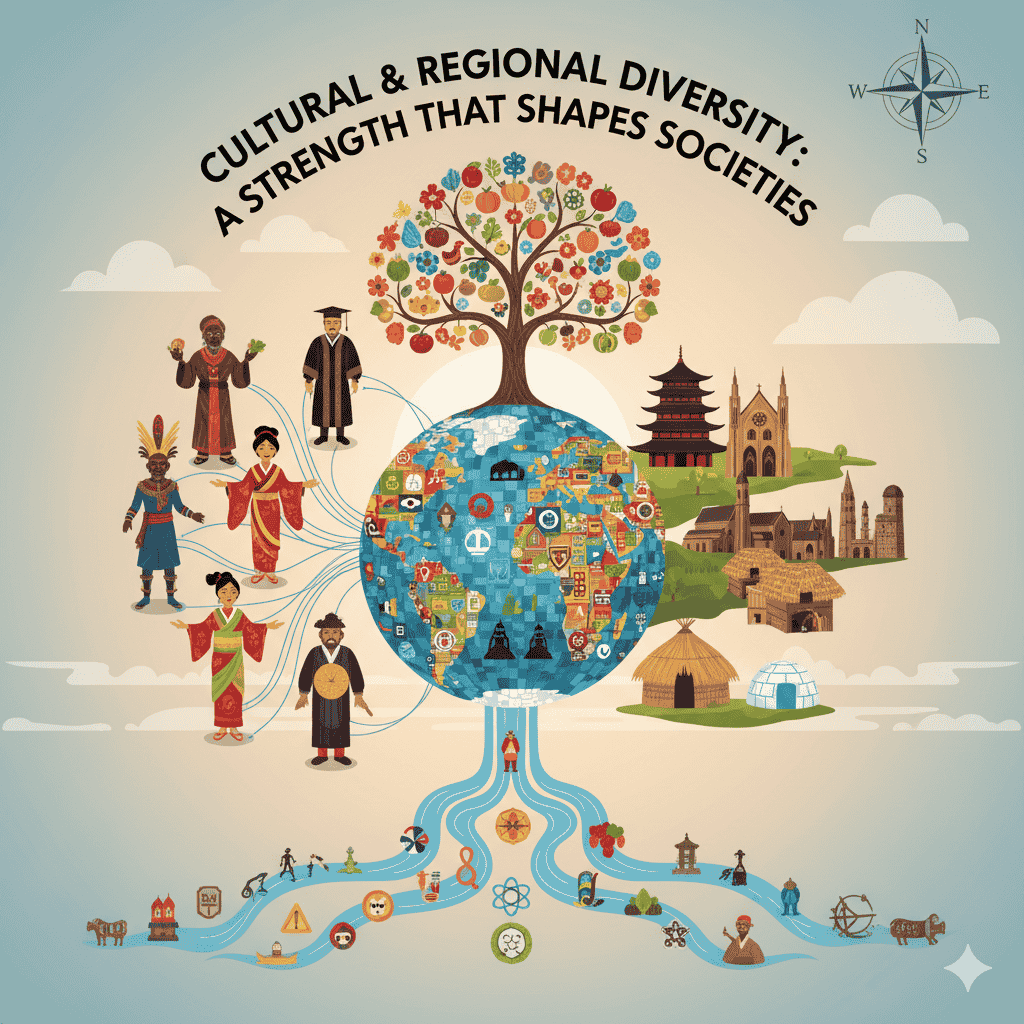
Cultural and regional diversity is one of the most enriching aspects of human civilization. Across the globe, communities are characterized by unique traditions, languages, cuisines, and lifestyles, each shaped by geography, history, and social evolution. While differences can sometimes lead to misunderstanding, when embraced with respect and inclusivity, diversity becomes a powerful asset. It strengthens societies, drives innovation, enhances social cohesion, and promotes economic growth.
Cultural and regional diversity refers to the coexistence of different traditions, languages, values, and lifestyles within a society. In today’s globalized world, diversity is no longer just a concept—it is an everyday reality. From food and fashion to festivals and faith, diversity defines how communities live, work, and interact.
Recognizing the value of Cultural and regional diversity is not just a moral choice—it is a strategic one. Societies that celebrate and integrate varied perspectives tend to be more resilient, adaptable, and forward-thinking. This article explores the multiple ways in which cultural and regional diversity serves as a strength that shapes thriving societies.
2. Understanding Cultural and Regional Diversity
Cultural and regional diversity refers to the variety of human cultures, encompassing language, religion, cuisine, social habits, music, art, and more. Regional diversity adds another layer, highlighting how geography and environment influence traditions and lifestyles. For instance, coastal communities often have seafood-rich cuisines and maritime traditions, whereas mountainous regions may develop distinct architectural styles and festivals.
These differences are more than aesthetic or superficial—they are reflections of centuries of adaptation, learning, and social evolution. Recognizing and valuing this richness allows societies to move beyond stereotypes and build inclusive communities.
3. Diversity as a Catalyst for Creativity and Innovation
One of the most significant benefits of cultural and regional diversity is the exchange of ideas. Individuals from different backgrounds bring unique approaches to problem-solving, resulting in creativity that a homogenous group may not achieve.
- Art and Literature: Exposure to diverse artistic traditions inspires new forms of expression. For example, fusion music, multicultural literature, and collaborative art projects emerge from the blending of distinct cultural influences.
- Science and Technology: Studies show that teams with diverse perspectives outperform uniform groups in generating innovative solutions. Different viewpoints encourage critical thinking and challenge conventional wisdom.
- Business and Entrepreneurship: Businesses that understand diverse markets and incorporate multicultural insights can create products and services that resonate globally.
- With 22 official languages and thousands of dialects, India is home to one of the richest linguistic landscapes in the world.
In essence, diversity acts as an engine for progress, pushing societies to innovate while honoring the wisdom embedded in different cultural practices.
4. Fostering Social Cohesion and Understanding
Cultural and regional diversity also strengthens the social fabric. When communities respect and learn about one another, empathy flourishes, and prejudices diminish.
- Shared Celebrations: Festivals, rituals, and local events bring communities together. Diwali, Christmas, Eid, and regional harvest festivals, for example, become opportunities to understand and appreciate different cultures.
- Language and Communication: Learning new languages and dialects enhances cognitive flexibility and encourages cross-cultural dialogue.
- Education and Awareness: Inclusive curricula that incorporate diverse histories and perspectives cultivate understanding and mutual respect from an early age.
When diversity is embraced rather than ignored, societies achieve harmony without sacrificing individuality, creating an environment where differences are celebrated, not feared.
5. Economic Advantages of Diversity
Cultural and regional diversity is not only socially enriching—it also has significant economic implications. Regions that showcase their unique heritage often experience increased tourism, trade, and investment opportunities.
- Tourism: Cultural festivals, local cuisine, traditional crafts, and heritage sites attract visitors, creating jobs and promoting economic growth.
- Global Trade: Businesses that understand regional customs, preferences, and traditions can tailor products for specific markets, gaining a competitive edge.
- Creative Industries: Music, fashion, film, and design industries thrive in multicultural settings, drawing inspiration from diverse cultural elements.
Moreover, preserving cultural traditions while integrating them into modern economic models ensures sustainability. Communities benefit economically while safeguarding their identity for future generations.
6. Education and Knowledge Exchange
Education plays a crucial role in leveraging cultural diversity as a societal strength. Exposure to multiple cultures fosters open-mindedness, critical thinking, and global awareness.
- Intercultural Learning: Students studying different traditions, languages, or histories gain skills to navigate a globalized world.
- Research Collaboration: Multicultural teams in academia and research bring varied perspectives, leading to breakthroughs in science, technology, and social studies.
- Skill Development: Learning from diverse cultural practices—like artisan crafts, culinary techniques, or traditional medicine—adds valuable knowledge to societies.
Education ensures that diversity is not just acknowledged but actively used as a tool to advance collective human understanding.
7. Challenges and the Path Forward
While diversity offers immense benefits, it also presents challenges. Misunderstanding, prejudice, and unequal opportunities can create tensions. Addressing these issues requires conscious effort:
- Promoting Inclusivity: Policies, laws, and community initiatives should ensure equal opportunities for all cultural groups.
- Encouraging Dialogue: Platforms for intercultural communication reduce misunderstandings and build trust.
- Celebrating Differences: Media, education, and public discourse should highlight cultural richness instead of focusing solely on differences.
By actively managing these challenges, societies can transform potential friction into a source of strength.
8. Conclusion: Diversity as a Pillar of Progress
Cultural and regional diversity is far more than a descriptive term—it is a vital resource that shapes the identity, resilience, and progress of societies. By embracing diversity, communities foster creativity, promote social cohesion, stimulate economic growth, and ensure cultural preservation.
Societies that value their diverse heritage while encouraging interaction and collaboration among different groups are better equipped to face global challenges. In a rapidly interconnected world, cultural diversity is not merely a strength—it is a foundation for sustainable growth, innovation, and unity.
In conclusion, celebrating and nurturing cultural and regional diversity allows humanity to thrive collectively while honoring the individuality that makes each culture and region unique. By doing so, we unlock the true potential of societies worldwide..
Culture includes the shared beliefs, values, practices, and expressions of a group of people. It influences how individuals see the world, make decisions, and express themselves. Language, art, food, music, and clothing are visible aspects of culture, while beliefs, attitudes, and traditions are the invisible yet powerful elements.
Cultural diversity refers to the presence of multiple cultures within a society. It allows people to learn from one another, share experiences, and develop empathy. Diversity is not only about coexistence—it is also about collaboration and growth.

I am Gouthami, the founder of VastraVedha Boutique. My vision is to blend timeless tradition with modern elegance, offering women handpicked pattu sarees and ethnic wear that reflect beauty, culture, and individuality. Each collection is carefully chosen with attention to detail, quality, and authenticity, ensuring every piece tells a story.